
Army Jobs
10 Women in the Army — Opportunities and Roles
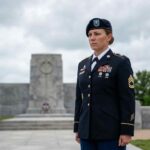
In the last few decades, there has been a great change in the discourse on women in the army, and the truth is that the evolution continues even today. Opportunities that did not exist a generation ago have opened up, and those that are open today have changed a lot from those available a decade ago. The following guide takes an honest look at the state of affairs today, the realistic opportunities available, and the journey to becoming an army woman.
1. How Things Have Changed
Go back a few decades, and the list of roles available to women in the army was genuinely short. Most positions were support-focused, with combat roles almost universally closed off regardless of individual capability or interest.
That has shifted substantially. Many countries have opened combat roles, including infantry and armored units, to women who meet the same physical and performance standards required of anyone else. This was no minor policy change. It was an acknowledgment of the greater understanding that capabilities matter more than gender when it comes to getting the job done, creating more opportunities for Women in the Army.
Positions of leadership have been made accessible to women as well. They occupy senior officer roles, command units, and influence military policies in a way that would have been highly uncommon just a generation before. None of this was accomplished without struggle; advocacy, policy shifts, and individuals overcoming considerable resistance had to be undertaken to establish capability.
The importance of knowing this history is that it informs what is realistic today, and realistically speaking, the trend is continuing down the path of inclusiveness in the majority of contemporary militaries.
2. Roles Currently Open to Women
In today’s army, the variety of positions available for women is extensive enough to include virtually all kinds that could be found in any modern military organization. Positions such as infantry and armored divisions have been opened up for women in many countries, provided that these women fulfill the same requirements as their male colleagues. This remains one of the more significant and relatively recent shifts.
- Medical roles have long been more accessible and remain a strong pathway, covering everything from combat medics to physicians and specialized healthcare leadership positions within military medical structures.
- Technical and intelligence roles, including signals, cybersecurity, and intelligence analysis, offer strong opportunities that rely heavily on technical aptitude rather than physical combat capability specifically.
- Aviation roles, pilots, and maintenance have been opened up considerably, with women flying combat aircraft and assuming high-level positions in aviation commands in many countries.
- Leadership and command positions. Across almost all branches, access to such roles is becoming easier, with women in general officer and command positions that had not been available even a few decades ago.
3. Eligibility and Entry Requirements
Basic eligibility requirements for women in the army largely mirror the standard requirements applied to all applicants, with a few specific considerations. Age requirements typically match standard entry windows, generally somewhere between 18 and 35, depending on the specific role and country, with officer pathways sometimes having slightly different windows.
Educational requirements follow the same structure as general entry. High school education suffices for many enlisted roles, while officer positions and specialized technical or medical roles typically require relevant degrees. Citizenship and background check requirements apply identically regardless of gender, focusing on legal status and a clean or explainable record rather than any gender specific criteria.
Medical fitness evaluations cover the same general health standards applied universally, though certain physical assessments include specific considerations relevant to female physiology, handled through standardized medical evaluation processes.
physiology, handled through standardized medical evaluation processes.
4. Physical Standards Explained
This is an area that generates genuine ongoing discussion, and understanding how it actually works matters for anyone considering this path seriously. Many armies have moved toward gender neutral physical standards for combat roles, specifically, meaning women pursuing infantry or other direct combat positions need to meet the same fitness benchmarks required of male applicants for those same roles.
Other general fitness testing, used for broader entry requirements not tied to specific combat roles, sometimes maintains separate scoring scales that account for general physiological differences while still requiring genuine fitness competency.
This dual approach reflects an attempt to maintain operational standards for roles where physical capability directly impacts mission success, while still applying reasonable general fitness benchmarks across broader entry requirements for Women in the Army.
Women in the army pursuing combat-specific roles should expect to train seriously and meet identical standards required of anyone in that same position, since these standards exist specifically to maintain operational effectiveness rather than as an arbitrary barrier.
5. Training Experience for Women
Basic training experiences for women in the army largely mirror standard training programs, with most countries having moved toward integrated training environments rather than separate tracks. Physical training follows the same structure and intensity as standard programs, particularly for roles with shared physical standards. Women undergoing combat-specific training undergo the very same standards of training that are expected universally from all those in such positions.
The living conditions under which women undergo training normally include separate quarters while still following the same training schedule, class training, and skills training as the rest of the group undergoing training.
Women generally have the perception that the shared experience of training helps to develop real camaraderie among trainees, regardless of their gender, since both parties are struggling equally in physical and mental aspects of the training process.
6. Career Growth and Leadership Paths
Women’s career progression in the army is identical to that of others and relies on good performance, longevity in the position, further training, and leadership skills.
The mentorship schemes designed specially to help women develop their careers in the military have developed quite extensively in many countries, allowing for the solving of the problem of underrepresentation in senior positions through professional development.
Women have gained access to senior command posts, general officer positions, and policy formation, which influences the structure of the entire military, proving that the advancement threshold has really been overcome in comparison with past generations.
Medical, technical, and intelligence career paths in particular provide excellent prospects for career growth, facing fewer barriers than conventional combat leader positions but still remaining a real option for Women in the Army.
7. Real Challenges Worth Knowing About
It would be misleading to suggest every challenge has disappeared completely, and being honest about ongoing difficulties matters for anyone seriously considering this path.
- Cultural adjustment still varies significantly by unit and country. While policy has changed substantially, individual unit culture sometimes lags behind official policy, requiring genuine resilience and confidence to navigate effectively.
- Balancing family planning with deployment schedules presents real practical challenges that affect career planning differently than for many male counterparts, requiring careful consideration and planning around family circumstances.
- Proving capability repeatedly remains a frustrating reality some women report, even in officially gender neutral roles, requiring sustained performance to overcome lingering skepticism that policy changes alone have not eliminated.
- Limited historical mentorship availability in senior ranks, simply due to fewer women having reached those positions previously, means some women navigate certain career stages with less direct mentorship from someone who faced identical circumstances.
8. Support Systems and Resources
Most of the modern armies have devised particular support mechanisms for their specific needs in terms of what women in the army face and how proper support will definitely help improve retention and performance.
Connections through mentoring programs between young soldiers and experienced female officers in a specific career path can help provide practical advice that cannot be taught through generic training programs.
Programs that deal with family problems during deployment and which are particular to soldiers who face issues of family planning and childcare due to their demanding military life have now become more common among service members of any gender, although especially helpful for Women in the Army. Organizations that represent the interests of women in the military have been constantly advocating for changes in policies and offering networking opportunities.
9. Stories That Show What Is Possible
There have been many women who have shattered the glass ceiling in different positions, showing actual evidence of what can be accomplished in the current military structure. Women have managed to pass the challenging training process meant for men, thus proving that if given an equal chance, capability equals the required standards.
Female officers have managed to command major military units and make strategic policy decisions where there was little female representation fifteen to twenty years ago. These individual stories matter beyond just inspiration. They demonstrate practical proof that the institutional changes opening these roles reflect genuine capability rather than symbolic policy adjustments without real substance behind them.
The role of women in the Army is evolving from integration to operational excellence. From my analysis, the narrative should shift away from ‘inclusion as a policy’ and move toward ‘competency as the standard.’ Modern military doctrine increasingly recognizes that operational success is driven by talent, technical specialization, and diverse problem-solving perspectives.
My strategic advice for women aspiring to join is to focus on ‘specialized utility.’ The Army values candidates who bring specific, high-demand skills to the table—whether in intelligence, logistics, communications, engineering, or command. Don’t just look for ‘opportunities’; look for where your specific skills solve a critical military need. When building your career profile, highlight your ability to lead, manage technical systems, and make high-stakes decisions. The evaluators are looking for officers and soldiers who can perform under pressure, period. Approach your path with the mindset that your performance and your contribution to mission effectiveness are the primary metrics of your success
10. Final Thoughts
There is no denying the fact that the scenario for women in the military has changed in its entirety, allowing for options that never existed before, and some challenges, but that should be understood well enough before opting for such an option.
In case a woman intends to join the military, she can opt for any career choice possible in modern-day military organizations, starting from combat roles up to leadership and highly specialized technological posts.
It is recommended to talk to some real-life recruiters and, if possible, women serving in such positions themselves. Their direct experience offers insight that policy documents and official descriptions simply cannot fully capture.
For more on related career paths, check out our guide on Army Career Growth — Ranks and Promotions Explained, and explore official resources like LinkedIn to connect with women currently serving about their own experiences.