
AirForce Jobs
How to Prepare for an Air Force Interview — 10 Proven Tips
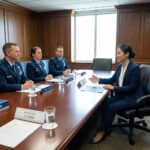
Most people walk into an air force interview treating it like a standard job interview. That approach rarely works well. The expectations are different, the questions probe deeper, and what actually impresses an air force selection panel differs significantly from what works in a corporate setting. This guide breaks down exactly what preparation actually matters and why.
1. Why Air Force Interviews Are Different
Whereas a normal job interview determines your capacity to do a job, an air force interview is far more rigorous. The panel members want to ascertain whether you truly grasp what it entails, whether you can handle intense pressure without breaking down, and whether your drive is deep enough.
Going for an air force interview and preparing well-rehearsed answers to questions asked is missing the whole purpose of the exercise. Selection panels with much experience have heard all the rehearsed answers a thousand times before. All they really need is someone who is poised under intense scrutiny, someone who has the ability to think clearly under pressure and is self aware enough not to be rattled.
Those who consider this simply another interview will end up frustrated at the end of the day. Those who go there and have done some soul searching regarding their motivation, the nature of air force service, and their abilities under pressure always perform better.
2. What the Air Force Interview Actually Covers
Most air force interview processes cover several distinct areas rather than a single conversation, and understanding the structure helps you prepare more effectively across every component.
- Motivation and background — why you want to join the air force specifically, what drew you to this branch over alternatives, and what you genuinely know about the career path you are pursuing.
- Situational and behavioral questions — scenarios designed to reveal how you actually think under pressure and whether you apply real judgment in difficult situations rather than just following simple instructions mechanically.
- Technical and role knowledge — basic understanding of air force operations, what your target role actually involves day to day, and why that specific pathway appeals to you rather than other available options.
- Physical and lifestyle readiness — sometimes covered conversationally to confirm you genuinely understand the commitment involved, including deployment realities and what sustained operational tempo actually demands from personnel.
Going into an air force interview without having thought seriously through each of these areas leaves gaps that experienced interviewers notice and probe directly.
3. Researching Properly Before You Walk In
Not doing real research before your air force interview is probably the single most avoidable mistake applicants make, and it shows immediately to anyone experienced enough to notice.
Learn about what exactly the target role entails on a daily basis beyond just the description of the job title. For example, if one is trying to specialize in aviation, maintenance, intelligence, or any other field, learn about what it really means to work in the said position beyond just hearing what sounds good from a broad perspective.
Understand the basics of air force hierarchy and relationships between different departments. While there is no need for extensive strategic knowledge, the demonstration of real understanding shows the interviewer true interest, which the former lacks. Understand the practical reality of deployment and operational rhythm for the target role. Interviewers at air force panels frequently inquire about the actual understanding of what the job entails.
4. Preparing Your Answers
You do not need a scripted answer memorized for every possible question during an air force interview. What you genuinely need is clarity on your key talking points before sitting down. Think through your real motivation clearly. Why the air force specifically? Why this particular role? Why now? Vague answers about wanting challenge or serving your country say almost nothing to interviewers who hear identical responses from every applicant who walks through the door.
Prepare specific examples using a simple structure — what the situation was, what needed to happen, what you actually did, and what resulted from it. This approach gives interviewers something concrete to evaluate rather than vague character claims with nothing specific behind them.
Think through your genuine weaknesses honestly too. Air force interview panels see through obviously safe answers immediately. Choosing something real and explaining what you are actively doing to address it comes across as significantly more credible than any polished non answer.
5. Common Questions and How to Handle Them
Certain questions come up in almost every air force interview, and thinking through your answers before the actual day makes a measurable difference in how you perform under real pressure.
Why specifically the air force? Don’t talk about discipline and opportunities in a generic way. Link your background or interests with specific advantages of the air force service which interest you and are unique for the air force.
How do you react to the situations of stress or conflict in the team? You need to show a real situation that you have had before in your experience. In other words, this question is used to check whether you have ever been under any difficulty or stress and how you reacted to it. The ability to solve the problem will be checked.
What do you know about air force service? No matter what, even a little information will make much more impression than any assumptions without knowledge. The knowledge about the life of the personnel shows the readiness which cannot be faked by rehearsing enthusiasm.
Where do you see yourself in five years? Link your answer with the air force service and career progress instead of just telling about your ambitions without connection to this service.
6. What to Wear and Bring
Presentation during an air force interview signals respect for the institution you are attempting to join, and getting this wrong creates an immediate negative impression before you have said a single word. Dress formally and conservatively regardless of how casual earlier recruitment office interactions may have felt. A suit or equivalent formal business attire is appropriate and signals you understand the professional standards relevant to the organization you want to join.
Bring organized copies of all required documents — identification, educational certificates, and any other materials the recruiter indicated were needed. Having everything immediately accessible rather than searching through a bag creates a noticeably better impression than fumbling around under observation.
Arrive ten to fifteen minutes early without exception. Air force culture values punctuality as a genuine professional standard, not just a courtesy, and showing up precisely at the scheduled time without buffer does not reflect the awareness of military culture you are trying to demonstrate.
7. Body Language and Presentation
Your body language during the air force interview can convey information just as well – if not better – than the information you convey verbally. Sit up straight but relaxed. Being too stiff or too lax in your posture sends the wrong message to the panel; there is such a thing as too much rigidity when you are trying to appear military. The right amount of confidence goes a lot further than overkill.
Keep eye contact but do not stare. Constantly looking away during the discussion implies you are unsure of your answers or not comfortable with the question; natural eye contact will show confidence and that you are being open. Always speak clearly and concise. The culture of the air force appreciates honesty and straightforwardness in their people, so waffling around without coming to the point will look bad.
8. Questions You Should Ask
In most cases, the majority of interviews with air force representatives provide an opportunity to ask some questions from your side, so taking this chance properly will prove the fact that you are truly interested in the job position.
Make sure to clarify the specifics of the initial months of training for your desired role in detail. In such a way you will demonstrate that you consider the future steps seriously instead of simply trying to cope with the interview itself.
You may ask the panelists about the things they appreciate the most when serving in the air force, if the format allows it. It is often easier to connect with people due to personal interest instead of simply asking standard questions about the terms of service.
At the moment of interview it is better not to concentrate your attention on the matters related to salary or vacation allowance. Discussing these topics at a later stage will emphasize the fact that other aspects are important for you as well.
9. Common Mistakes That Cost People
Even well prepared candidates sometimes stumble during an air force interview because of avoidable patterns that undermine otherwise solid applications.
- Generic motivation statements. Saying you want discipline, adventure, or to serve your country tells an experienced panel almost nothing specific about whether you genuinely fit air force service in particular.
- Not knowing actual role details. Being unable to describe what your target department genuinely does day to day creates an obvious impression that your choice was based on limited information rather than deliberate research.
- Rambling answers without clear structure. Long unfocused responses that never arrive at a clear conclusion consistently underperform compared to concise well organized answers, even when covering identical content.
- Appearing unaware of the lifestyle reality. Panels specifically probe whether applicants understand what sustained operational commitment actually means for personal life. Appearing genuinely surprised by these realities raises serious doubts about readiness.
- Leaving without asking any thoughtful questions. Walking out without asking anything signals low genuine interest, even if every answer during the interview itself was technically competent.
10. Final Thoughts
Aceing an Air Force interview is less about rehearsing scripted answers and more about demonstrating ‘behavioral congruence’—the alignment of your stated values with the core pillars of the Air Force. My analysis of successful candidate profiles shows that evaluators aren’t just looking for factual knowledge; they are stress-testing your composure, ethical decision-making, and your ability to remain grounded under intense scrutiny.
My strategic advice for interview preparation is to shift your focus from ‘informational recall’ to ‘scenario-based narrative.’ Prepare concrete examples from your life that demonstrate leadership, conflict resolution, and personal accountability. When you face complex situational questions, do not rush for a quick answer; instead, pause to analyze the core problem and articulate your thought process clearly. An Air Force interview is essentially an evaluation of your temperament. If you can maintain intellectual honesty and calm confidence while navigating challenging inquiries, you distinguish yourself as a candidate who is mentally ready for the rigors of service.
For more on related career paths, check out our guide on How to Join the Air Force, and explore resources like LinkedIn to connect with current and former air force personnel about their own experiences.