
AirForce Jobs
Air Force vs Army Jobs — 7 Key Differences Explained
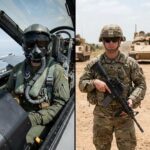
Choosing between the air force and the army is one of those decisions people spend months going back and forth on without ever getting a clear answer. Both are valid career paths. Both offer strong benefits and genuine opportunities. But they are genuinely different in ways that matter significantly depending on who you are and what you actually want from a military career. This guide breaks down the real differences between air force vs army so you can make a more informed choice.
1. Why This Decision Actually Matters
People sometimes treat the air force vs army choice as relatively minor — as if both paths lead to roughly similar experiences with different uniforms. This is far from being the case. The daily routine, the physical requirements, the work environment, and the career path are too different to ensure that making the choice on the basis of partial information will always lead to disappointment.
Getting this decision right upfront matters more than most recruitment materials suggest. You are not just choosing a job — you are choosing a lifestyle, a community, a daily environment, and a set of long term opportunities that build on each other over years of service. Understanding the genuine differences between air force vs army before committing saves you from spending years in a role that never quite matched what you were actually looking for.
2. Lifestyle and Daily Reality
This is probably where air force vs army diverges most noticeably for most people in day to day experience.
Air force bases generally offer more established facilities and infrastructure compared to army postings, particularly in non combat environments. Housing quality, access to amenities, and base facilities tend to be more developed in many air force locations, reflecting the nature of air force operations that centre around fixed installations rather than mobile ground operations.
Military service requires more time spent outdoors, training in outdoor settings, and a generally more physically intensive day to day schedule. If you truly enjoy the outdoors, physical challenge, and variation in locations, the military will be a better fit than the air force for you.
Deployment experiences also differ between air force vs army in important ways. Army deployments, particularly for infantry and combat roles, tend to involve more direct ground engagement. Air force deployments often centre around base operations, though specific roles certainly see significant operational intensity depending on current requirements.
3. Physical Demands Compared
Physical requirements differ meaningfully across air force vs army roles, though both services maintain genuine fitness standards that cannot be approached casually.
Army combat roles carry some of the most demanding physical requirements in any military service — extended foot marches with heavy loads, sustained physical exertion over days rather than hours, and physical standards designed around genuine operational ground combat demands.
Air force physical standards are real and consistently enforced, but the emphasis differs for most roles. Cardiovascular fitness, maintaining weight standards, and passing regular fitness assessments matter consistently, but the day to day physical demands of most air force roles differ from ground combat army positions.
For aviation roles within the air force, specific additional physical requirements around G force tolerance and vestibular function exist that simply have no direct army equivalent outside specialized army aviation roles. If raw physical challenge and regular outdoor operational demands genuinely appeal to you, the army tends to deliver more of that consistently across a wider range of roles compared to air force service.
4. Training Differences
Basic training in both services covers military fundamentals, but the culture and specific content differs between air force vs army in ways that reflect each service’s operational focus.
Army basic training tends to be more physically intense, with greater emphasis on fieldcraft, weapons handling, and the physical endurance demands relevant to ground combat operations. The adjustment to army basic training often comes as a genuine shock to people who underestimated the physical component specifically.
Air force basic training maintains real physical standards but places significant additional emphasis on technical knowledge, professional bearing, and the precision oriented culture that characterizes air force service more broadly. The environment tends to be more structured and less field focused compared to army equivalents.
Specialist training after basic training differs dramatically depending on your specific role in either service. Air force technical training programs for avionics, intelligence, and other specialist roles can run many months and involve significant classroom and technical learning components that differ substantially from army specialist training focused on ground combat skills.
5. Pay and Benefits
Base pay scales across air force vs army are largely comparable at equivalent ranks, since most countries use unified military pay scales rather than service specific compensation structures.
Disparities in total compensation are likely to arise from the existence of allowances and other supplements peculiar to some occupations or postings and not through disparities in basic salaries across the services. Aviation pay, sea pay for certain posts within the Air Force, and technical specialty pays are some examples of such disparities in total compensation within each individual service.
Long-term benefits such as health care provision, housing allowances, educational grants, and pension plans affect both services in a similar way, although certain details may differ depending on the particular service you are looking into.
The honest answer on air force vs army pay is that neither service consistently pays significantly better than the other at equivalent ranks and experience levels — total compensation depends far more on your specific role, posting, and performance than on which service you belong to.
6. Career Growth and Advancement
Promotion systems in both services follow similar fundamental principles combining time in grade, performance evaluations, and available positions at senior levels, though specific cultures around advancement differ between air force vs army in practice. Air force technical roles often offer strong career development pathways with clear certification and qualification milestones that map directly to advancement opportunities and sometimes to strong civilian career prospects after service.
Army leadership pathways, particularly through non commissioned officer ranks, carry significant institutional weight and provide genuine leadership development that transfers broadly across both military and civilian contexts after service. Both services offer officer commissioning pathways that open significantly different advancement ceilings compared to enlisted careers, and both have similar educational requirements for officer entry regardless of which service you are considering.
The honest assessment on air force vs army career growth is that advancement depends more heavily on individual performance, deliberate development choices, and the specific role you occupy than on which service you belong to broadly.
7. Job Variety and Specialization
Both services offer broad job variety, but the specific categories and the depth of specialization available differ meaningfully between air force vs army. Air force roles are heavily weighted toward technical specializations — aviation, electronics, intelligence, cyber, and maintenance roles that require sustained technical development and produce deep expertise in specific systems and domains.
The duties in the army have a wider scope in terms of operations, from combat to logistics, engineering, and other support jobs, with some having greater variation in day-to-day activities compared to the highly specialized nature of work in many air force career tracks.
For individuals looking for deeper knowledge of their field, the air force is more likely to provide greater opportunities in most areas. Those individuals seeking diversity in operations, leadership at a relatively junior rank, and physical challenges in varied environments are better served by the army.
8. Which One Suits You Better
There is no universally correct answer in the air force vs army comparison — there is only the right answer for your specific strengths, preferences, and long term goals. Choose the air force if you are drawn to technical complexity, want to work in more established base environments, are interested in aviation or electronics, and prefer a service culture that emphasizes precision and professional bearing alongside physical fitness.
Joining the army is the right choice for you if the challenge of working physically attracts you, you desire to take up positions of leadership early on, you prefer variety in terms of operations in different environments, and you like working in operations which involve ground action.
In case you are still in doubt, it is a good idea to communicate with recruiters from both branches and, most importantly, with people who are already serving in positions that interest you. There is no better way of knowing air force vs. army facts than through their experience.
9. Common Misconceptions
Several persistent misconceptions about air force vs army consistently lead people toward poorly informed decisions.
- The air force is easier than the army. This is not accurate as a general statement. Air force standards are real and enforced consistently. The demands differ rather than being categorically less demanding — technical precision requirements in the air force carry their own serious consequences for failures that differ from ground combat risks but are no less significant operationally.
- The army offers more career variety overall. Both services offer genuine variety. The air force offers deep technical specialization that the army generally does not match in the same domains, while the army offers operational ground variety that most air force roles do not replicate.
- Pay is significantly better in one service. Base pay at equivalent ranks is largely comparable, with total compensation differences emerging from specific role supplements and allowances rather than service level pay differences.
10. Final Thoughts
Choosing between the Air Force and the Army is not just about selecting a branch; it is about aligning your cognitive and physical strengths with the right operational environment. From my analysis, the Air Force generally favors candidates with a high aptitude for technical precision, rapid decision-making, and STEM backgrounds, as the work environment is often systems-oriented. In contrast, the Army requires immense physical resilience, field-level adaptability, and a strategic mindset suited for dynamic, ground-based operations.
My strategic advice for aspirants is to conduct a ‘Self-Compatibility Assessment’ before applying. Do not base your decision solely on uniform prestige or public perception. Instead, evaluate your long-term career goals: do you thrive in highly structured, technical aviation environments, or are you built for the rugged, unpredictable challenges of ground command? Choosing the branch that matches your core personality traits is the single most important factor for long-term career sustainability and professional growth
For more on related career paths, check out our guide on How to Join the Air Force, and explore resources like LinkedIn to connect with personnel from both services about their own experiences.
Looking for more career guidance? Browse our Air Force Jobs category for more opportunities and guides.